
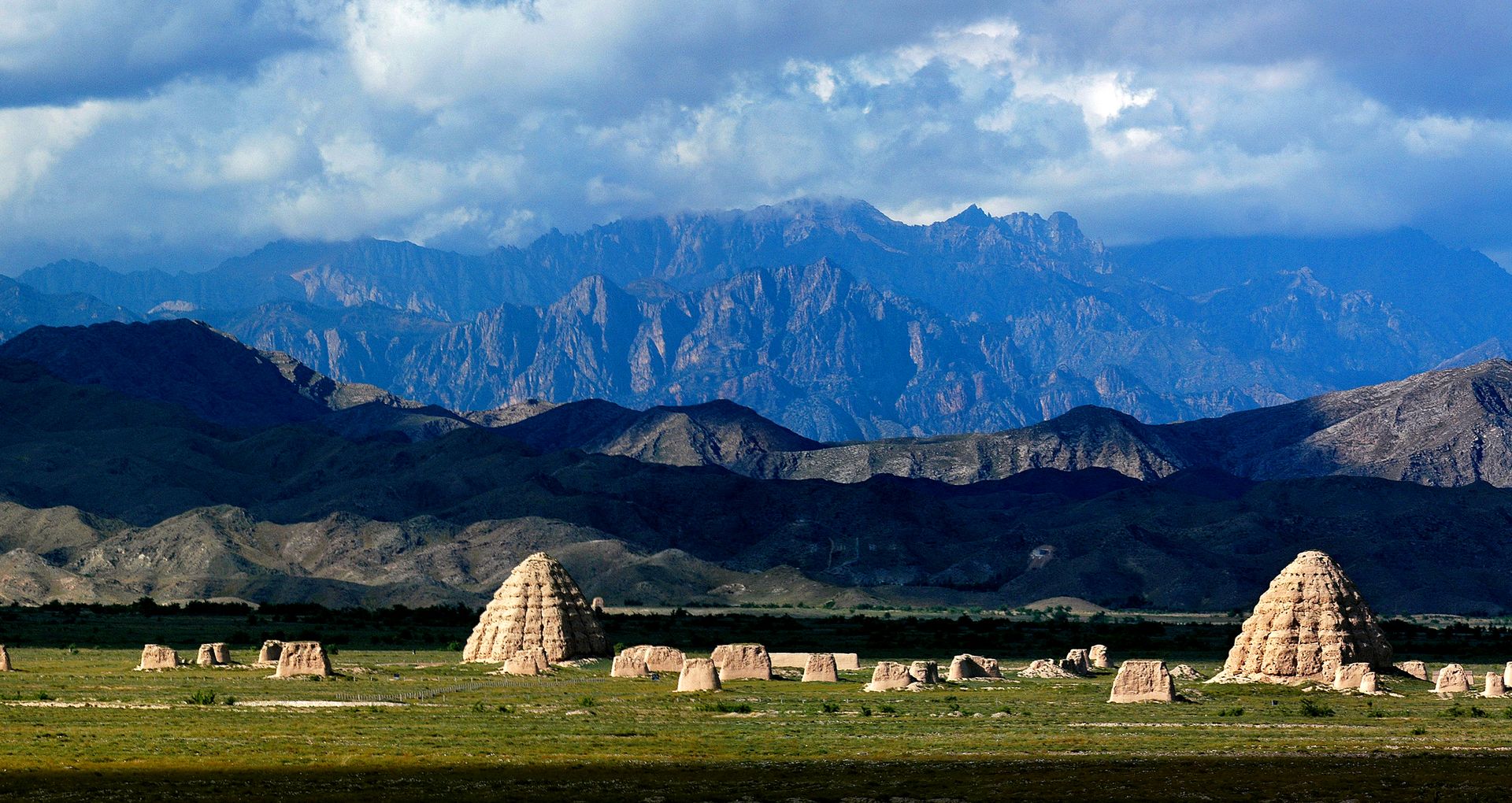
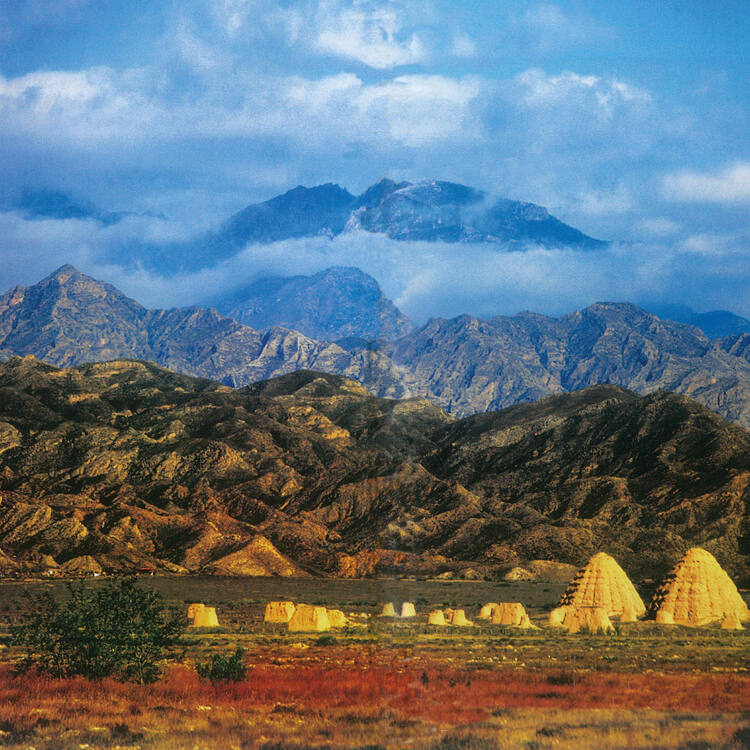
The Western Xia Mausoleum is the largest, highest level, and most well preserved relic of the Western Xia Dynasty (1038-1227) that has survived to this day. Archaeological remains include: 9 imperial tombs, 271 accompanying burial sites, 1 large building site of 50300 square meters (northern end building site), and 32 flood control engineering sites, as well as over 7000 sets of building components, remains, and other cultural relics unearthed from the mausoleum area. The Western Xia Mausoleum provides special testimony to the disappeared Western Xia civilization and indispensable archaeological support for the formation and development of China's unified multi-ethnic country.
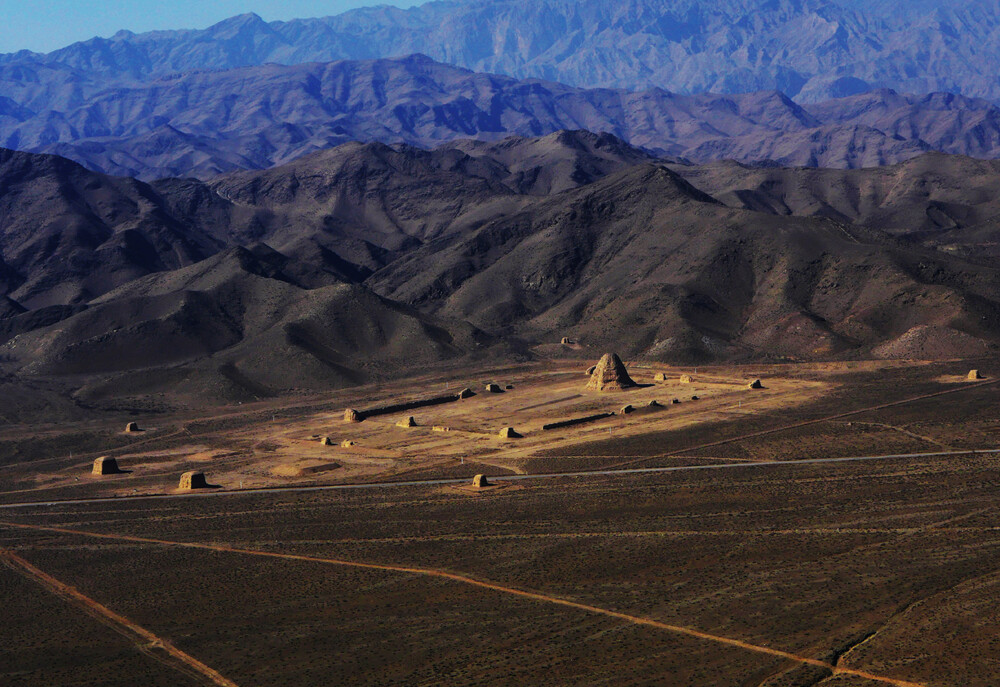
The Xixia Mausoleum District is located on the eastern foothills of Helan Mountain, about five kilometers east to west and ten kilometers north to south. Within an area of more than 50 square kilometers, it follows the natural rise and fall of hills and ridges, with 9 imperial tombs and more than 200 accompanying tombs of princes and nobles. The scale of Xixia Mausoleum District is comparable to that of the Ming Dynasty Thirteen Tombs in Beijing. The ground buildings of the cemetery are all corner towers, gate towers, stele pavilions, outer city, inner city, Xian Hall, tower shaped tomb platform and other architectural units. The overall layout of the plan is a vertical rectangle, arranged in a symmetrical format according to the traditional Chinese pattern of using the north-south centerline as the axis. The Western Xia Mausoleum constitutes a unique form of Western Xia architecture in China's cemetery architecture.
Comments powered by CComment